by James D. Greiner
In most places below its confluence with the shallow and swift Chulitna, five miles above the approach to Don Sheldon’s backyard airstrip at Talkeetna, the Susitna River, or “Big Sue,” as it is known to Alaskans, is at least one-half mile in width.
There is, however, a place 65 miles above Talkeetna where this generous breadth shrinks to a measly 50 to 75 yards between vertical rock palisades. Here, during spring, the Susitna’s 6,750,000-gallon-per-minute flow attempts to surmount itself in a roaring dervish of hissing gray spume at a place called Devil’s Canyon.
Sheldon had been almost content with the transport of itinerant fishermen, miners, and homesteaders during the weeks that followed his rescue of a woman from the Talkeetna River, but this contentment was overshadowed by a vague restlessness. It was 1958, Sheldon was 36 and was more convinced than ever that his specialty flying would become the profitable venture that he had hoped for.
The arrival of the northbound train from Anchorage, an event of regular though transient interest, took on new dimensions that same afternoon. Sheldon noticed that a crowd had gathered on the planking near the station almost before the engine jarred to a stop and braked against the slight grade. Resting on a special flatcar like some huge landbound ark was a bright yellow boat, its bow decked over, and sporting two formidable looking engines in its capacious stern section. The detachment of U.S. Army scouts that presided spelled property of Uncle Sam.
As the 50-foot boat was being offloaded, Sheldon joined the group of curious spectators, and found that little if any information was being offered by the Army as to why the boat was there, or what it would be used for. Speculation was the order of the day, and Sheldon had already heard several rumors, when he spotted a vaguely familiar face among the GIs struggling with the boat. The officer was a lieutenant with the Search and Rescue section at Fort Richardson in Anchorage, and a casual acquaintance. He was busy checking a sheaf of dog-eared papers.
“Hi, hi! How’ve ya been?” grinned the pilot.
“Good, Don. How’s yourself?”
“Great. Hey, what’s the deal here? You guys goin’ fishing?”
The officer glanced once more at his paperwork and allowed that the boat was to be used in an attempt to chart navigable watershed in the Susitna drainage.
Sheldon was incredulous. “Hey, you don’t mean you’re going to attempt to run this thing up the Susitna and through the canyon?”
The lieutenant, who had never seen Devil’s Canyon, missed the surprise in Sheldon’s voice. His reply was curt and precise.
“That’s exactly what we plan to do, and as soon as we can get under way, the better.”
There wasn’t time for Sheldon to appraise the real chances of such a mission on such short notice, and even if there had been, he was sure that the officer was not particularly interested in his homespun opinions. He did, however, have a very vivid picture of the Devil’s Canyon, and had serious doubts about the possibility of the mission’s success.
“Lookee, I’ve got a heck of a lot of fishing traffic up that way in the next few days, and I’ll check on your progress from time to time.”
With the boat successfully launched, the small detachment of scouts that comprised the crew cast off, and with the powerful engines churning the current-roiled river, disappeared from view around the first upstream bend. Sheldon had flown over the five-mile stretch of boiling water in Devil’s Canyon many times. It was, in fact, a very familiar landmark to the pilot, one that he used often. From the air, the sheer rock walls of the canyon rising to 600 feet produced an awesome corridor, above which the air was characteristically turbulent, and at the bottom of which existed almost continual shadow. Of the current, Sheldon says, “The current here is so swift and heavy that even the salmon get beat to death trying to swim upriver.”
The day after the scouts started up the Susitna, Sheldon flew over the river to make a casual check on the progress of the boat, but did not see it. Since he was not really searching for it, he did not fly over the entire section in which he judged the party to be.
On the second day, he was curious, a trait which to date has accounted for not only his promptness in times of trouble, but to his own personal safety as well. This time, with two elderly fishermen aboard, and en route to Otter Lake north of Takleetna, he deliberately flew up the Susitna to the tail of the Devil’s Canyon rapids. As he reached the flume below the fast water, he banked sharply to the left, and rolled the portly Aeronca Sedan up on its ample side. Something had caught his attention at the periphery of his vision, and when he identified it on the second swing, his skin crawled.
“I was shocked to see pieces of yellow wreckage floating down the river. It was boiling.”
He continued the 10 miles to Otter Lake, offloaded his passengers, and quickly retraced his path to the rapids below Devil’s Canyon.
“I had a feeling this was a fresh wreck, and they’d really gotten clobbered. I saw barrels of gasoline bobbing around here and there. The wreckage was strewn downriver to a point almost 25 miles below the canyon, and it consisted mostly of bright yellow chunks of the boat’s hull and other debris, but no people.”
Sheldon then flew upriver, above the canyon itself, down to a point just above the rim, and after making several passes in the seething air, spotted a huddled group of men on a narrow ledge of wet rock in the shadows at the base of the north wall. Even from his vantage point, he could tell that they were in bad shape and in desperate need of assistance.
“They were in a terrible condition, cut up, and barely managing to cling to the shelf of rock. Their clothing was literally torn off, and a few of them still had life jackets on. These were also in shreds. They had apparently floated down about 60 percent of the canyon, a distance of about three miles.”
Because he knew the place so well, Sheldon could rapidly appraise his chances of retrieving these men, and they looked poor. The canyon walls at their top were but a scant 200 yards apart, and the river was a closed succession of hissing combers broaching over house-sized boulders in the river bottom.
His chances were not only poor, but probably nonexistent, for the Aeronca, though heavier than the Super Cub, weighed only a scant 1,400 pounds empty and would be tossed like a tiny rock, even if he somehow managed to land it on the surface of the river below, a feat which at this moment looked impossible.
To drop onto the surface of the rapids here would be suicide, for the floats needed a flat surface upon which to dissipate the inertia and forward momentum of the airplane. Sheldon needed little or no imagination whatsoever to visualize the results of running headlong at 65 miles an hour into any one of the tumbling white crests of water that surely towered up to six feet above the surface of the river.
“There was no place to land below them, it was just more of the same terrible rough water. I did a 180-degree turn, and about a quarter mile above the guys, I spotted a slick, high-velocity stretch of river that looked like it might be big enough. I made a couple of passes to try it on for size, and then set myself up for an up-canyon approach to the place. It looked mighty small.”
As Sheldon dropped the Aeronca below the tops of the canyon’s walls, he found himself flying in a narrow alleyway of wet spruce and vertical rock. The wings rocked with the turbulence produced by the unstable air of the canyon and he carefully adjusted his glide path. The floats were causing his airplane to respond to the controls in a delayed manner, which is normal, due to a lowered center of gravity, and in a routine landing produces no problems. Here, control of the airplane was everything, and Sheldon hitched forward as far as his seat would allow, to gain every last inch of forward visibility.
Even before the floats touched down, spray and mist from the river surface were streaking the plexiglass windshield of the Aeronca, and Sheldon had the compulsion to firewall the throttle plunger and climb away from the terrifying spectacle of the gray water, but he resisted it. Then he was down.
Sheldon was landing against a current in the magnitude of 30 miles per hour, and the plane decelerated at an alarming rate. When an airplane is moving through the air at an airspeed of 90 to 100 miles per hour, the control surfaces—ailerons, rudder and elevator—work at optimum efficiency. This is due to the rush of air over the wings and tail surfaces, produced not only by the forward motion of the plane through the air, but by the slipstream blast of the rotating propeller.
An airplane, out of its design element and on the ground or water, is much more difficult to control, primarily due to the loss of this forward velocity, when all that is left is the rush of air produced by the propeller. In addition, an airplane on floats is infinitely less maneuverable than one on wheels or even skis, and as a result, the Aeronca became an unresponsive deathtrap as it almost immediately began to accelerate downriver with the current.
“The nose wanted to swing in about every imaginable direction, but somehow I managed to keep it pointed upriver with the throttle. I was floating backward at about 25 miles an hour, the windows were fogged, and I couldn’t see where I was going.”
Sheldon was certain of one thing, that behind him was the beginning of the heavy stretch of boiling rapids he had seen from the air only moments before. He was at that moment like a man blindfolded, rolling backward toward a cliff in a car without brakes that he could not steer.
Sheldon will never forget those moments that elapsed so rapidly that they precluded panic.
“As the plane backed into the first of the combers, I felt it lurch heavily fore and aft. It was like a damned roller coaster, the water was rolling up higher than my wing tips, beating at the struts, and I could barely see because of the spray and water on the windows. All of a sudden the engine began to sputter and choke, and I knew it was getting wet down pretty good. If it had quit, I’d have been a goner, but it didn’t.”
Suddenly, he saw the huddled group of Army scouts on the small rock ledge, through the Aeronca’s side window. Like white images on a frozen screen, they stared with open mouths as the airplane backed past them. And now the most critical and delicate aspect of the entire rescue began.
“After spotting the men, I had to stop the airplane’s backward motion, which I did with full throttle, but I knew my problems had only begun. I had to get the airplane close enough to the ledge for the guys to jump out onto the float and get aboard without damaging a wing on the rocks. If they missed, in their condition, they’d drown for sure.
“I jockeyed around and finally got the wing angled just enough to get one of them on the left float, and still keep myself from turning downstream.”
Once aboard, the grateful GI managed to balance-walk long enough to get into the cabin while Sheldon was already making his next move.
“Because of the heavy current and extremely rough water, it was impossible for me to taxi upriver, let alone take off in that direction, so all I could do was continue to float backward as I had been doing. It was a mile and a half downstream to the end of the rapids, and that first trip was one of the longest rides on a river that I’ve ever taken. It was a shocker.”
Once below the rapids, Sheldon was able to turn the plane and make a downriver takeoff. He would make three more of these landings for there were seven men on the ledge, and he could only remove two at a time due to the need to keep the plane as light as possible for maximum maneuverability.
With the unbelievable taken care of, Sheldon now accomplished the impossible. He returned to the rapids three more times without damage to the airplane, himself, or the rest of the stranded scouts, and then turned his attentions to the eighth man. Sheldon had ferried the seven to the tiny settlement of Curry on the Susitna, a way station for the Alaska Railroad, and then returned to the canyon.
“I flew upriver, looked and then looked some more. I still saw a lot of debris, but no eighth man. I was just about ready to go back for another load of gas when I finally spotted him. The guy had dragged himself out of the river, and he was about 18 miles below the canyon. He had floated all that way hanging onto a piece of debris, and when I got to him, he was a shock case and could barely crawl aboard. The water was about 55 degrees and he was all skinned up and bruised, but had no broken bones.”
The rescue at Devil’s Canyon had been a marvel of efficiency. It was the first of a multitude of tasks that Sheldon would accomplish with the passage of time. Many would be of milder cast, while some would exceed the events that had transpired that day at Devil’s Canyon. Today, Don Sheldon is well aware of the part that luck played in the four landings and subsequent takeoffs, for not even he could gauge the depth of the water as it plunged over the jagged rocks in the floor of the Susitna, yet somehow his floats missed them all four times.
Don received a special citation in a formal ceremony from the U. S. Army, Alaska, and today, when asked which aspect of the entire Devil’s Canyon episode he remembers best, he smiles thinly.
“I guess it would have to be the expressions on those guys’ mugs as they crawled aboard my old floatplane.”
Alaska Magazine—October 1974
Used by permission
• Rescue From Devil’s Canyon


• Alaskan Skies
Wrote this years ago as a promo piece for Bill and Homer (a drinking town with a fishing problem). It's a little too travelogue-y in retrospect.
"I'll show you the Alaska you came to see, but don't call me a bush pilot, it's over blown," says Bill de Creeft. Named 'Alaska Man Of The Decade' for selfless and daring rescues, Bill says, "Thirty years ago the Coast Guard didn't have many helicopters, so I was frequently called to help out. At that time it was just part of living here; if someone was in trouble and you had an airplane, you were just naturally going to be out there trying."

In Alaska, flying is almost as much a part of everyday life as a commute on the Interstate in the "Lower 48." But pilots, like drivers, vary in skill and experience. When you hire one as a tour guide, picking the right one is an insurance policy and also your guarantee you'll see what Alaska offers.

"Today, as a sightseeing pilot, my job is different," Bill says, "my responsibility is to take care of my passengers. Sometimes when the weather's bad I may not take you anywhere. I'd rather disappoint you than scare you. But if the weather cooperates and you'll come with me in an airplane that's been an old friend for over thirty years, we'll see Alaska together."

Departing from Beluga Lake in Homer southwest of Anchorage, Bill and his floatplane will give you a bird's eye view of whales breaching in the bay, brown bears fishing in rivers, salmon by the thousands, moose meandering through meadows, big horn sheep gazing at you from impossibly steep mountainsides, and more eagles in one tree than you can count. You'll even see a nearby town, Soldotna, built on a dozen tiny islands that has bridges instead of streets, farmers with boats instead of tractors, and herds of oysters instead of cows.
Bill is a weathered version of Sean Connery. He built the log cabin they live in working outdoors only when Alaskan weather was so bad he couldn't fly--which in Alaska means either white-out blizzard or zero-visibility downpour. He orchestrates an annual neighborhood paella cookup in honor of his Spanish ancestry. "Who knows," he says,"Maybe I'm a Count, not a no account". Picture a man who can bring tears of pleasure to your eyes when he plays the bagpipes.

His wife Barbara quietly puts up with all this while firmly running Kachemak Bay Flying Service. Barbara's the one who worries about where the money's going to come from for the overhaul on their engine while Bill dickers to buy a sister-ship of their aircraft that went down on the North Slope in the '30s and hasn't been seen since. Picture a woman who gently rocks her granddaughter while she calls on the shortwave radio to make sure Bill is okay flying over treacherous Cook Inlet.

Their aircraft, a Travel Air S6000B, is extraordinary too. It was built back when there were round engines, and rag wings, and shiny varnish on golden wood ribs. With wicker seats, mahogany framed roll down windows, fresh flowers in a crystal vase. a tiled lavatory and broadcloth seat covers it personified luxury aloft in 1929. Fledgling Delta and Braniff flew them and they were touted as the "Limousine of the Air."

In the glory days of the mid-30s, Phillips Petroleum even sponsored their aircraft (not one like theirs, theirs) and a crew that stayed up for 13 days without a landing or, for that matter, a bath. A hose was lowered from another aircraft to transfer fuel and, clinging to a makeshift catwalk, the crew changed spark plugs inches from the spinning propeller, thousands of feet from the ground.

Bill knew we owned a Travel Air biplane made by the same company as his floatplane and wanted us to know what Alaska was like during the Travel Air's heyday. So the first night we flew out to Willard's Moose Camp on Caribou Lake. The cabin there was a remnant from the '20s built as a shelter for pilots forced down by weather. Eight feet square, it had a wood stove that used sawdust mixed with diesel fuel for fire starter. Amenities included flour sacks full of sawdust for mattresses on the bunk bed, and slices of truck inner-tube for springs. It was a moose lodge, but it was bears that partied all night. We hardly slept worrying about the noisy neighbors, what with the nice collection of nuts and berries someone thoughtfully provided.
The next day Bill picked us up at the dock and we flew to a lake at the foot of a glacier. Some travelers go to the ends of the earth to get away from it all. Go to Loonsong Mountain Lake Camp and you'll understand what being away from it all really means. Bill carried every stick of wood, every nail, every gallon of paint, and every knife and fork for Loonsong into the tiny lake that it sits on. It took over a hundred trips about 30 minutes in the air each way. You can't get there in by land except hiking for days. Stay a week and he'll drop the Sunday paper on the porch for you as he flies over.

Loonsong cabin, with its spacious rooms and massive posts and beams, is constructed with giant spruce logs cut from where the building stands now. Charming antiques, art, pioneer artifacts and a cozy wood burning stove warm the living room. A kitchen, bath, two guest rooms and a sleeping loft, accessed by hand-hewn stairs, accommodate a single couple, family, or up to six friends. Huge picture windows frame the lake, forested mountainsides and the blue ice-face of a vast, unnamed glacier. The sod-roofed Finnish sauna will soothe your body and soul at day's end.
The next night we spent back in Homer at Wild Rose Cottages, log cabins on East Hill just two miles out of town. With cooking facilities, huge windows, and an awesome view of Kachemak Bay, glaciers, and mountains the place was wonderful. Each cabin is 'Alaska homeyness' at its best with lots of amenities and comforts. Indoor-living accommodations make each cottage great in sunshine or rain, summer or winter. There's even a floppy-eared rabbit that thinks he's a chicken and hangs out with the locals.
To sample more modern accommodations, we tried Land's End Reanort, a 80-room hotel where many of the rooms face Kachemak Bay and have private viewing decks. These comfortable rooms come in a number of different styles to suit any taste and budget including 21 deluxe rooms added in 2001. They all have bay windows (Kachemak Bay, that is) with incredible views, including active St. Augustine volcano. A unique feature are the hand made beds fabricated locally from beetle-kill spruce. Sounds of the surf made our room a private haven after a busy day.

We flew across the inlet to Kachemak Bay Wilderness Lodge, nestled among towering spruce, on an island peninsula. The beauty and uniqueness of the lodge and its surroundings are a delight. The artistic detail in every building was beautifully planned and executed. Each delightfully unique cabin has fine art, homemade quilts, tile and cedar bath, a picture window and electricity--something you won't always find in the wilds.
Views from the solarium and lodge windows frame China Poot Bay's exquisite estuary and a panorama that unfolds from sea level to the top of nameless 4,000' mountains. Yes, there are so many mountains and so few people there are actually mountains that haven't been named. The friendly experienced staff of trained naturalists shared the country with us at our pace. Trails radiate from the lodge and invite exploration. As we amble over ancient bedrock and through dense spruce forests, each unexpected opening in the trees offers a visual gift: a sea otter sleeping on the water below, a kingfisher flying to its burrow, a whisper of smoke rising from a distant volcano.
Bill dropped us off at sea for our final treat. The Katmai Coast is an unlikely destination for a tourist boat, but skipper Michael Parks, and first mate Lydia Rabottini, along with owner John Rogers, have been running a heavyset 70 foot tugboat built for the U.S. Army 50 years ago. With thick wooden beams built into its rising lines, motor vessel Waters has cruised for years during the summers exploring the coast and sharing views of the bears of Katmai with people seeking a unique Alaska adventure.
When you go to Alaska you will want to go flying. Alaska is a place where pilots are beloved and airplane noise reason for rejoicing. Most of the places we visited would take days by car and hours by boat to reach (if you could get there at all) but only a few minutes by air. Visit Kachemak Bay Flying Service in Homer, Alaska and you can fly Alaskan skies with a humble hero that in 40 years has accumulated over 20,000 hours of flying experience. And he will show you the Alaska you went to see, just as he promised.
Kachemak Bay Flying Service, PO Box 1769, Homer AK 99603 1-907-235-8924
Loonsong Mountain Lake Camp, Box 956, Homer AK 99603 907-235-8910
Wildrose Cottages, P.O. Box 665, Homer, Alaska AK 99603 (907) 235-8780
Land's End Resort, 4786 Homer Spit Road, Homer AK 99603 907-235-0400
Kachemak Bay Wilderness Lodge, China Poot Bay, Box 956, Homer AK 99603 907-235-8910
M/V Waters, c/o Katmai Coastal Bear Tours, Homer AK 99603 1-800-532-8338
• Don't Piss off A Bush Pilot
Here's Bill holding forth on a Jaguar forum (that's pronounced Jag_you'_r, yankee), decrying some political jabs on what's supposed to be a politics-free automobile community:
Argh !!
Read the rules you guys !
Just because we are silent does not mean we agree !?!
We are not supposed to have to be a captive audience....I may ramble but I try not to give you the benefit of my knowledge on politics world history and the real bullies in this world..
Sick of hearing the sheep bitch about the sheepdog while the wolf moves in...
What you say sticks in my craw....but tic a loc ...I'm not saying it !!
Now about jags .
Bill de Creeft '32 model and high mileage seen three wars from the ground.
[later]
But see...that's what I'm saying; start out on health care and it rolls right on into war and Bush and why we are hated!
If it had been about health insurance I would not have said a word.
Until I got to be 65 and became a ward of the State it cost me a couple of hundred thousand dollars paid over years and years to repair me from an accident because I had once had arthritis (until I learned what not to eat) and couldn't get insurance....And I would rant with the rest.
But that ain't politics!
Don't eat high fructose corn syrup and stay skinny...Don't eat meat with growth hormone implants in it and you won't need the pills. At 75 I don't even take aspirin and I was looking at methotrexate !?!
But stay offa war unless you want my side of it and it won't be on this site...in fact I've made my statement in other years and in other lands under my flag.
Oi ! It's hard to stick to Series One, Two and Three !!!
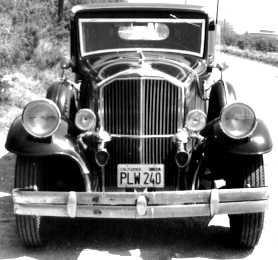
The most beautiful car I know and the sweetest V12 and I've owned a 1953 v12 Ferrari all out 183 mph race carand a 1932 Pierce-Arrow V12...bloated plutocrat that I am.....
Like Forrest Gump, "that's all I have to say about that !"
I mean it darn it! No politics!!
I love the cars, I love you guys, I love being alive...(I might shoot you if you try and steal my car...I know I will if you try and hurt my grand-daughter) ...we are all different and we are here for one purpose, under Flag of Truce to talk about one kind of car.
Even if I were in the pub, I'm not interested in convincing you of anything...I've even got one hot Lump and one sweet 12 so I won't fight about that either!!
I was 5 years old and a refugee in the Spanish Civil War...I grew up through WW2...I've got a CIB from the 2nd Inf.Div. in Korea as an infantry squad leader in 1952 (been called a Baby Killer)...spent 40 years flying bush in Alaska....I haven't been hiding under the bed!
I'm descended from one of the guys that wrote the Bill of Rights and from people that have been on the wrong side in wars in Spain, Scotland, and on opposite sides at Gettysburg at the stone wall .......
None of us has the right to tell each other what to think....and when the wolf comes I'll be the sheepdog...but meantime let me sleep in the corner near the stove and dream of rabbits and biting tires on jaguars....!?!
"Don't Tread On Me"...older than the States.
I used to be in a Pipe band and there is a very old tune Cogadh Na Sith...means "Peace or War"; that's the essence of it, nothing in between.
No nibbling and quibbling...no agitating, no "signifying".
They also used to say, in the Band, when the girl brought around the water glasses at a pub "Och!, Lassie, We're nae dirty, we're thirsty !!"
See you in the Pub, someday...Until then, everybody, may you fire on all twelve!
(Nurse! Some Milk of the macDougalls here! Oban for my friends!!)

[later - referring to a winter trip in his Jag]
They did fine even up to 125 mph on graded snow (but very cold so good traction) in the long desolate open stretches....averaged 55 mph for 700 miles at 38 below F. non-stop from Haines to Anchorage.
Actually that was the series One that I have had for 15 years and we had been all through it; took out the bent front tray and replaced all the front suspension parts and installed a brand new 383 RV roller cam crate motor and 700R-4 and pulled rear tray and did everything new and a 3.31 LS xj-s rear and all bushings,brakes and suspension.
The run was from Haines at 9AM after digging out of 18 inches of snow and got into Anchorage at 11 at night (gained an hour) and saw four cars ,one wolf and two caribou throughout the whole time.
Haines junction for gas was 30 below,Burwash was 38 below Tok was 42 below so didn't dare stop! three or four yellow snow stops with the motor running and white ice fog out the tail pipes.
No food but 70% chocolate bars.
It's over 700 miles and I went as fast as I could the whole time. Road was beautiful graded very cold snow...penalty for leaving the road would have been a very cold night so actually I was conservative...as i remember 125 was 4000 rpm.
(Redline on the Aston I used to race was 137 mph and i spent a lot of time there while Phil Hill went by at 170 in a Testa Rossa as I waved him by...)
Got an SCCA Senior Competition License in 1958
It was a fun drive in a frozen waste in a good car that I had built up to do more than that(and may have!)...if you look at the map you will see.
The average with fuel stops is only about 55 mph so sounds mild, and obviously I wasn't flat out except for when I could.
I've seen a lot more from people passing me on the autobahn.
That was 7 or 8 years ago when I was young and strong. Once in a lifetime experience and never to be forgotten or repeated I'm sure (the times they are against it!)
Well here i go again running my mouth off but you asked, Frank, and this is restraint from me !?!
I don't try and justify or defend it...and i did enjoy it and here i am.
And my tires were at the "100 mph plus" pressure so "what could possibly go wrong !?!"
Sir Wm.Lyons built that car to do that.
From now on I will be cruising in the van den Plas but I have my memories from this life! Big Grin !
(It would do it too, but i won't ask it.)
cheers,
Toad of Toad Hall
(poop! poop!)
PS... Listen to this, (since it's late at night here and nobody is listening) I once raced in a race with Dan Gurney, Jean Berha, Richie Ginther, Roy Salvadori, Ken Miles, Masten Gregory, Jo Bonnier, Phil Hill, Lance Reventlow ,...and more, all in one race, and all faster than me!
But I had fun, and I finished and I wasn't last.
April, 1958 Riverside Intl. Gran Prix. Me and my little Aston DB3S (factory # 115) Single plug head, drum brakes early model. No crew, no budget, 1937 Dodge pick-up tow truck. Money went to Avon Racing tires. Lovely little car.
